Date: 03-Oct-2026
Location: Project Villages
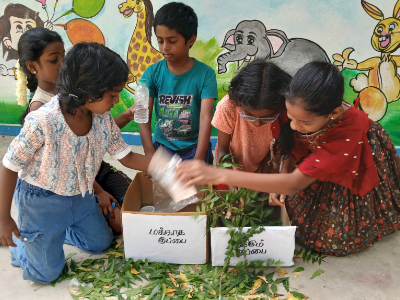
SARVAM conducted a special environmental awareness training programme for around 300 students across 15 villages, focusing on the importance of protecting the environment and encouraging responsible practices in everyday life. The sessions helped students understand that air, water, soil, trees, plants, animals, birds, rivers and other natural resources are essential for the well-being of all living beings. The students were encouraged to recognise environmental protection as a shared responsibility and to understand the importance of caring for the natural world.
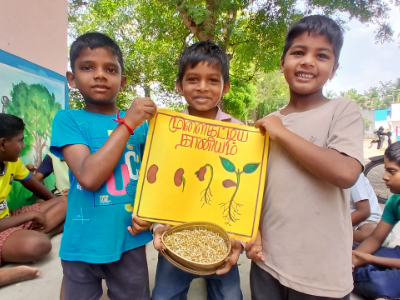 The training introduced students to practical ways of conserving natural resources. These included planting and caring for trees, saving water, reducing the use of plastic, preventing air pollution, protecting animals and birds, and understanding the importance of addressing climate change. Students were also encouraged to adopt simple eco-friendly habits in their daily lives, such as walking or cycling for short distances, avoiding unnecessary burning of waste, saving electricity and keeping their surroundings clean.
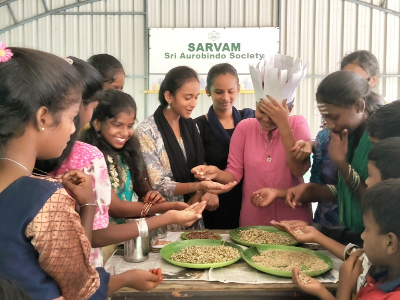 As part of the practical learning, students participated in a demonstration on growing microgreens, where they were introduced to simple methods of cultivating them. Another demonstration focused on biodegradable and non-biodegradable waste, helping students understand how different types of waste can be identified, separated and managed appropriately. These practical activities made the environmental concepts more engaging and helped students relate the ideas discussed during the training to situations in their daily lives.
The programme encouraged students to follow the principles of Reduce, Reuse, Recycle, Grow Trees and Protect Nature both at school and at home. They were also motivated to share what they had learnt with their families and friends and to become responsible ambassadors for environmental protection. The training emphasised that small actions, when practised consistently by individuals and communities, can contribute to a cleaner, healthier and more sustainable future.